Gershom ObwoyaBack to his story
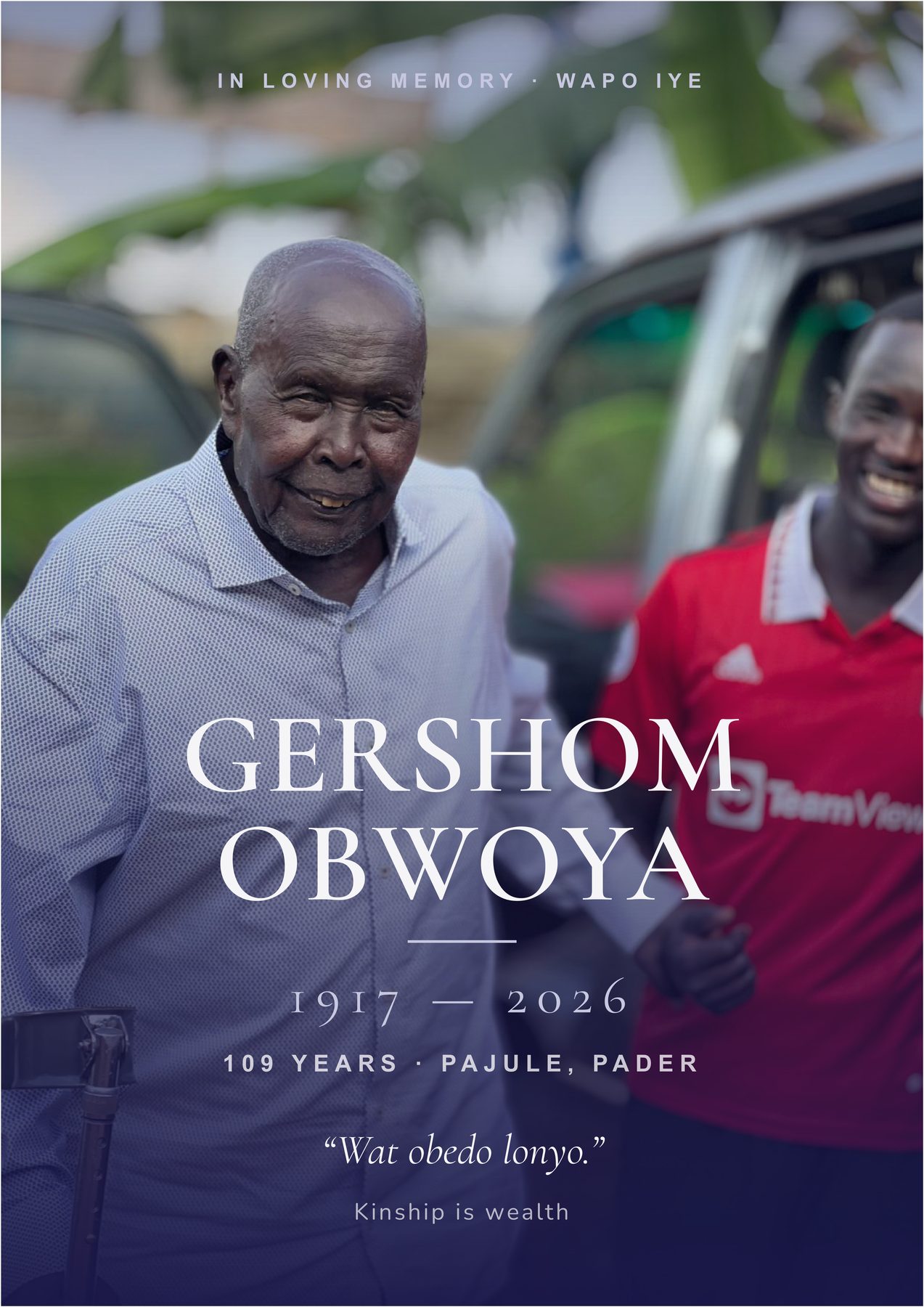
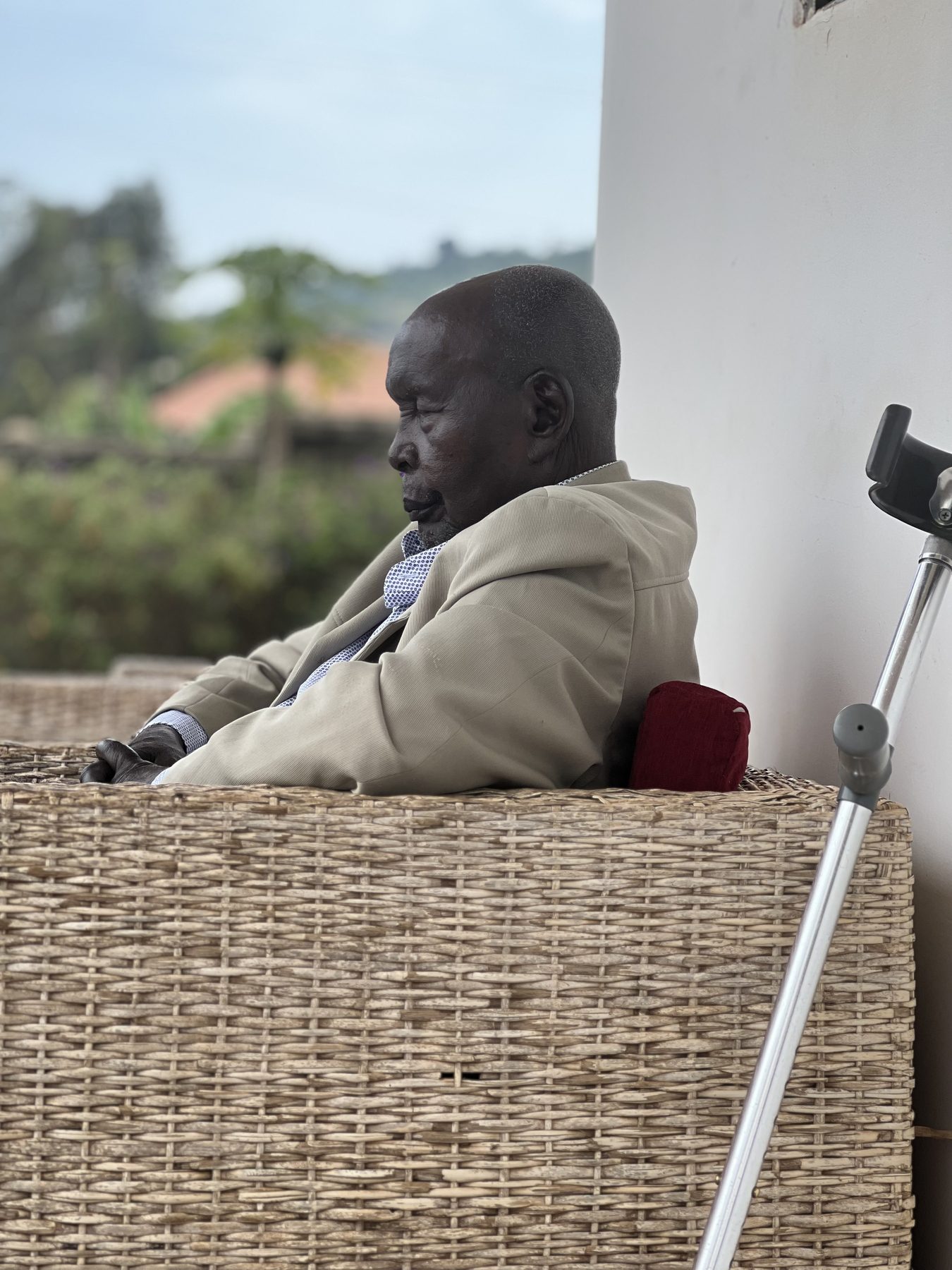
Memorial portrait for Gershom Obwoya
16:15 · St Stephen's Church of Uganda · Pajule

The last time
he walked in.

He never missed a service here. Not in war. Not in old age. Not once that anyone can remember.

14-08-2026 · Coming home
The final journey

He came through these doors for the last time.

At 16:15 he came through these doors for the last time, and for the first time in a hundred years he did not walk in on his own feet.

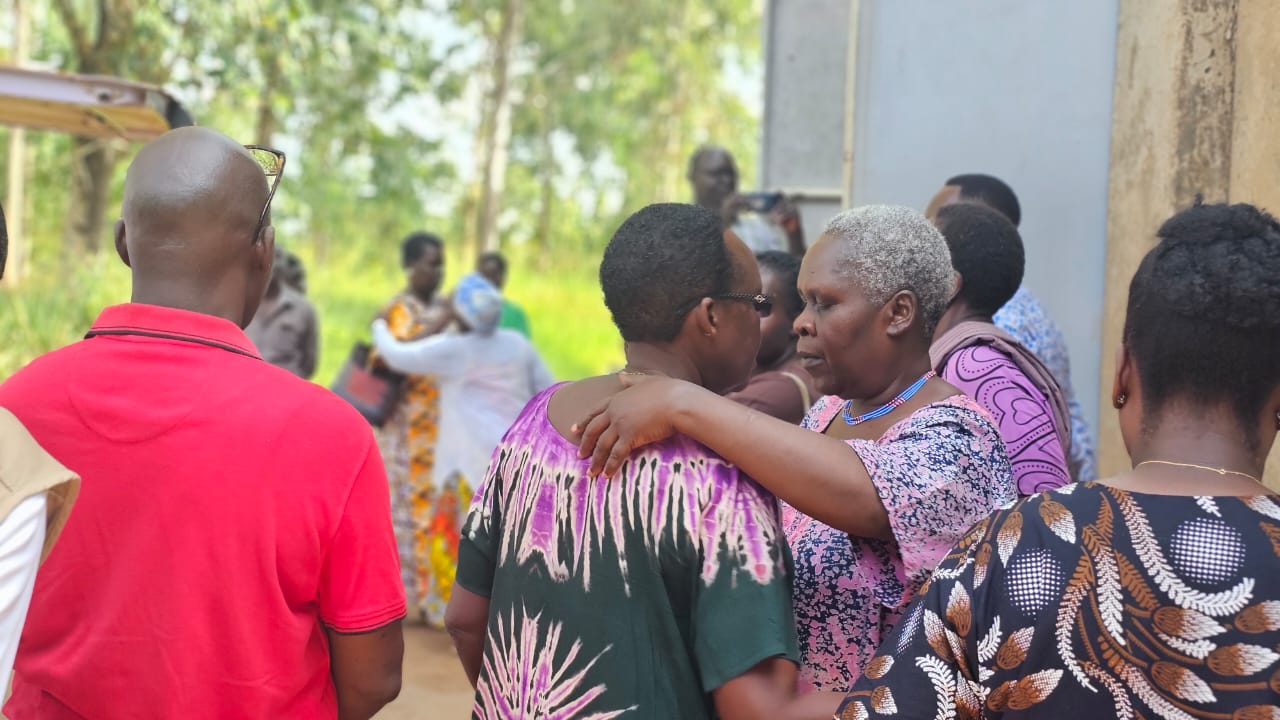
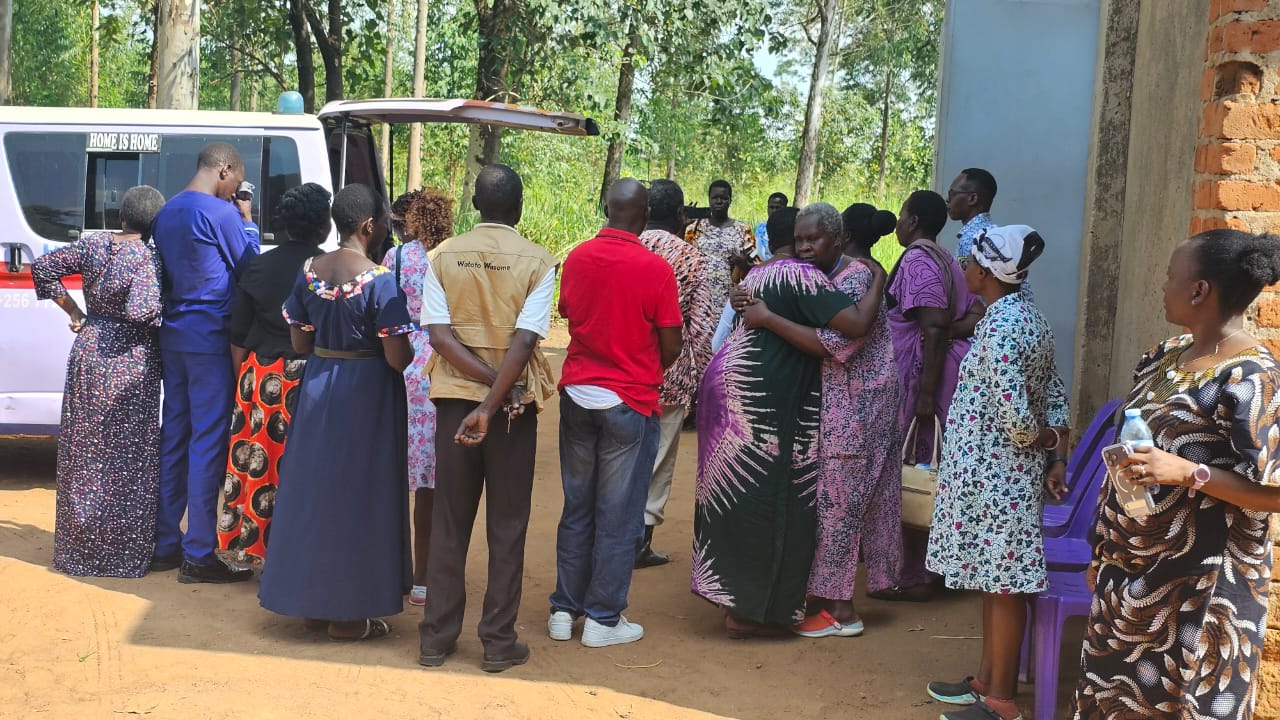
Uncle Dickson brought him the whole way from Gulu and never left the cortège. His children were waiting at the door to receive him — Aunt Susan, Aunt Betty, Auntie Joyce, Uncle Francis, Uncle Ochola, Uncle Okello. Six of the twelve, standing where their father had stood every Sunday of their childhood, receiving him.

Family receiving Baba at the church entrance
16:15 · The arrival

The church received him.

He never missed a service here. Not in war. Not in old age. Not once that anyone can remember. At 16:15 he came through these doors for the last time, and for the first time in a hundred years he did not walk in on his own feet.

Uncle Dickson brought him the whole way from Gulu and never left the cortège. His children were waiting at the door to receive him — Aunt Susan, Aunt Betty, Auntie Joyce, Uncle Francis, Uncle Ochola, Uncle Okello. Six of the twelve, standing where their father had stood every Sunday of their childhood, receiving him.

16:15 · St Stephen's Church of Uganda · Pajule
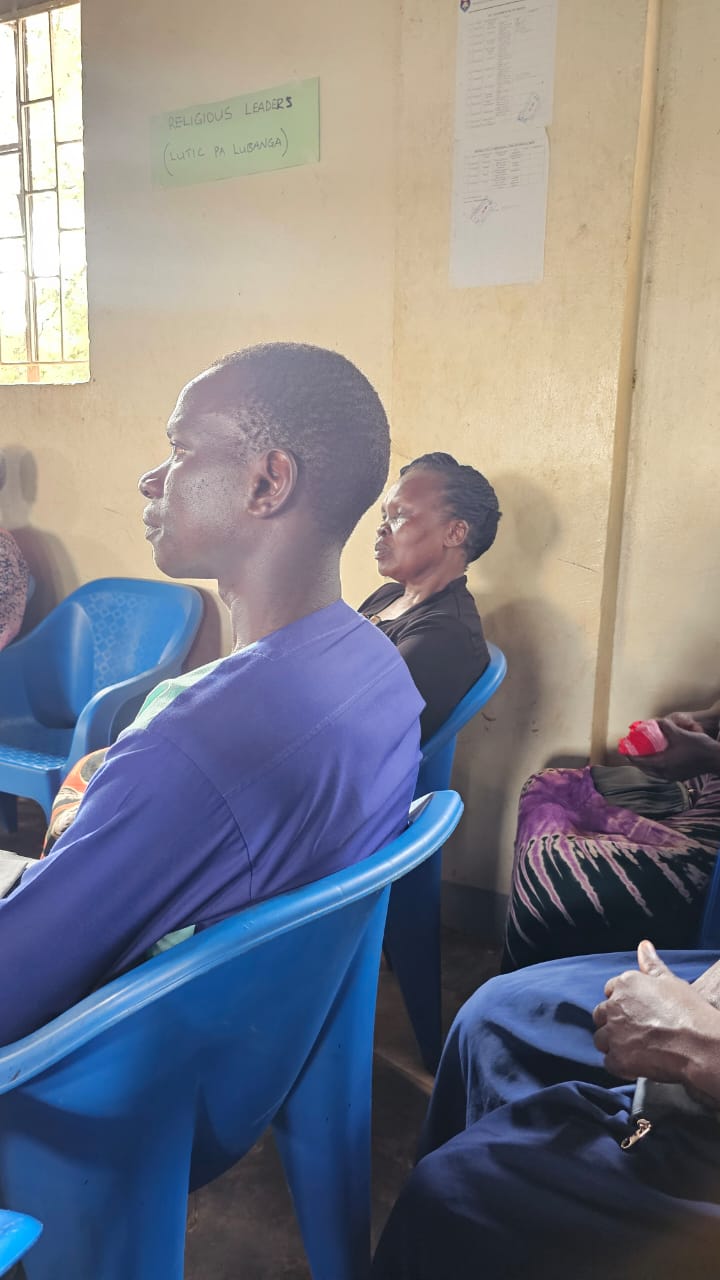
Vincent, Baba's friend and caretaker, at the church
02 · Vincent

Some grief is a testimony.

Vincent was not family by blood. He was Baba's friend and his caretaker, which in the end is a harder job and a closer one. He is the one who knew what Baba ate, how he slept, which mornings were good.

When the casket came in, Vincent broke. He had to be held up and walked down the aisle. Nobody looked away and nobody told him to stop.

There is a kind of grief that is a testimony — you only weep like that for a man you actually served.

Baba's white casket inside St Stephen's Church
03 · The white

He loved white.

He loved white. He wore it well, and he wore it on purpose. His casket was white. He came into his church dressed the way he had always dressed for it.

There was something unmistakably Baba about that last entrance. Even in the casket, he arrived in his own language.

Family and mourners gathered at St Stephen's Church
04 · The ululation

He was not carried in. He was escorted.

Then the women began to ululate.

There is something Africa knows that the rest of the world has to be taught. That sound is not only grief. It makes the men brave and it lets the women scream — and inside the scream there is joy, and there is victory. It is the noise a family makes when it refuses to send its father away quietly.

His choir escorted him up the aisle. They did not carry him in mourning. They carried him in triumph. And he was laid at the front of the church — at the font, in the seat of the guest of honour, the place he had earned by turning up for a hundred years.

He was not carried in. He was escorted.

Baba's white casket inside St Stephen's Church
05 · The hymn

“Are you washed in the blood?”

“Are you washed? Yes, I am in the blood.”Kilwoki ki remo? Ee, kilwoka ki remo.

That was the song that carried him in. Of all the songs they could have chosen, they chose the one that asks a question and then answers it. He had answered it a long time ago.

The choir opened the gates of heaven. The traditional harps and their bows produced melodies even Mozart would have been jealous of. And the chacha — the shaker or rattle made from corrugated tin with small stones inside — carried the bright rhythm of a people saying goodbye without surrendering their joy.

“Kilwoki ki remo?”“Ee, kilwoka ki remo.” · Suggested Acholi rendering for the hymn line.
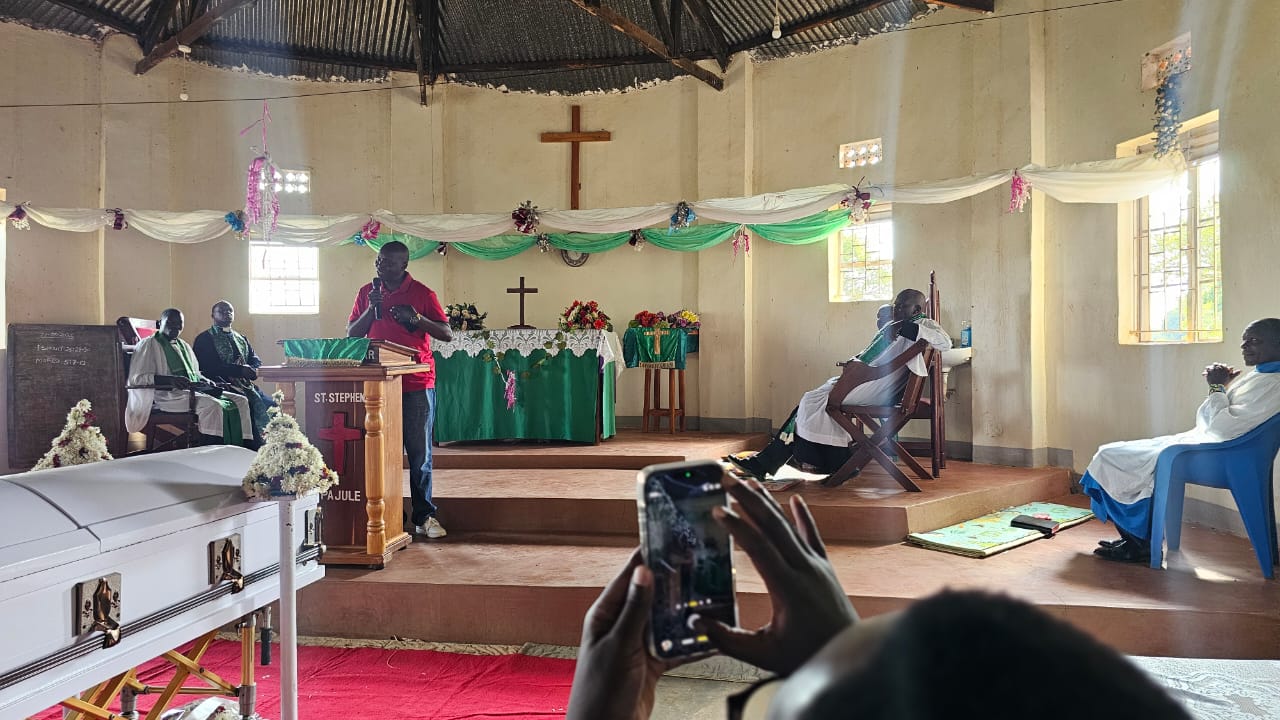
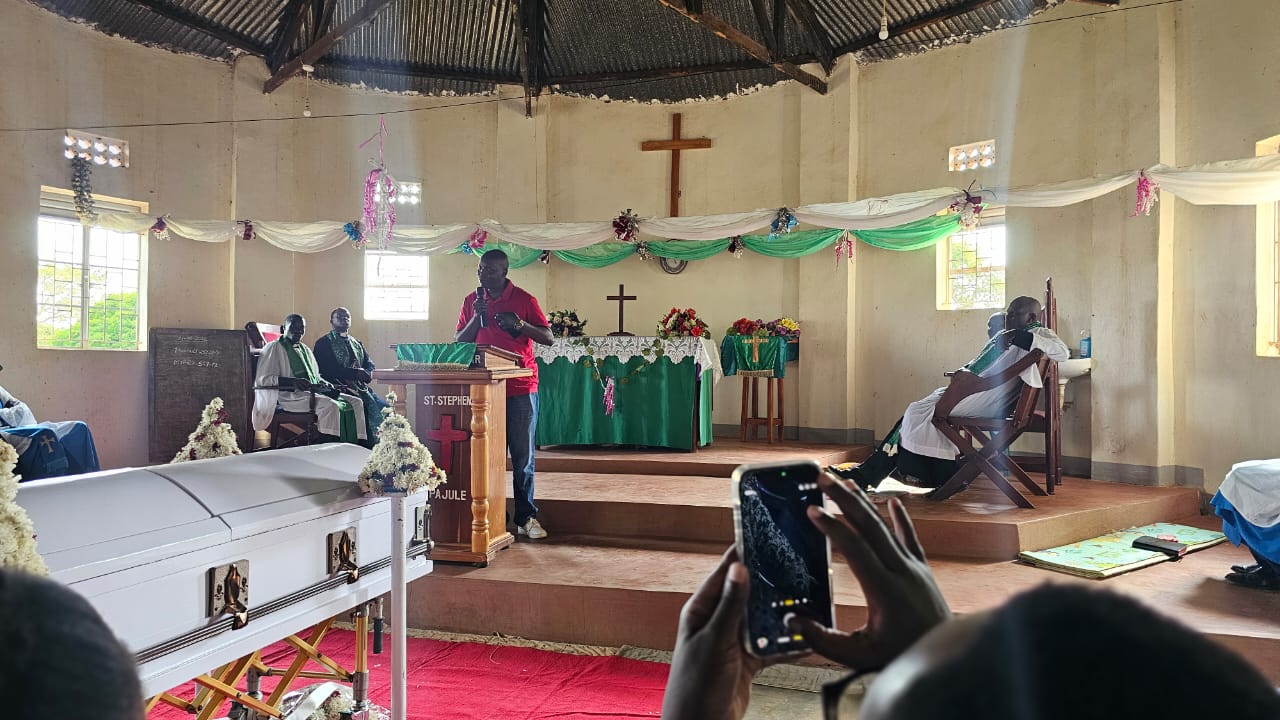
Uncle Francis speaking at St Stephen's Church
06 · Uncle Francis speaks

Celebrate him with every celebratory bone.

Uncle Francis spoke in church for the siblings. He introduced all Baba's siblings that he had outlived, then told us Baba was the third born.

He reminded us that while he had lost a father, we were gathered to celebrate a man who had outlived some of his own children. There were few friends from Baba's generation left to stand beside him. He had outlived his contemporaries.

Then he gave us the instruction we needed: celebrate his father with all the celebratory bones in our bodies.

A final memorial image for Baba
07 · The walk out

What a Friend We Have in Jesus.

The service ended with “What a Friend We Have in Jesus.” “Oh, what needless pain we bear.”

We walked out carrying the words, the music, and one another. The church had given Baba back to us for one final service. Then the doors opened, the choir led the way, and we took him home.

“Yecu en Laco ma wa dano.”Suggested Acholi rendering: “Oh, what needless pain we bear” — “Peko ma wa tye kwede, wa cweyo i cinge.”
08 · Home, for now

He is home with us now.

The burial has not happened yet. Baba is lying in the sitting room, in the room where we would sit quietly observing him. The room is still holding him, and for this moment we are still allowed to be near him.

He lost Lidya seventeen years before this day, and he kept going. Seventeen years a widower and he never once behaved like a man waiting to die.

Our parents have lost a father, just as they had lost their mother earlier. And in our own selfish way we wanted him to outlive us — or at least to spare us the day we knew was coming. That is not faith. That is love being unreasonable, which is the only way love knows how to be.

Death is not as cruel as it looks. It only travels with so much sadness. Baba spoke about it the way a man speaks about a journey he has already packed for — a transition into a better life. That is our assurance. Not a hope. A thing he told us himself.

We miss seeing him around. We are happy that he is where he has always wanted to be, prepared in purity for the life he believed was waiting. But tonight, and in this room, we still miss him.

Baba, wa piri. Wa yom pien in tye kama in mito bedo kwede. Ento wa piri neno in i kin wa. Bed maber, Baba.Suggested Acholi rendering: Baba, we miss you. We are happy because you are where you have always wanted to be. But we miss seeing you among us. Rest well, Baba.